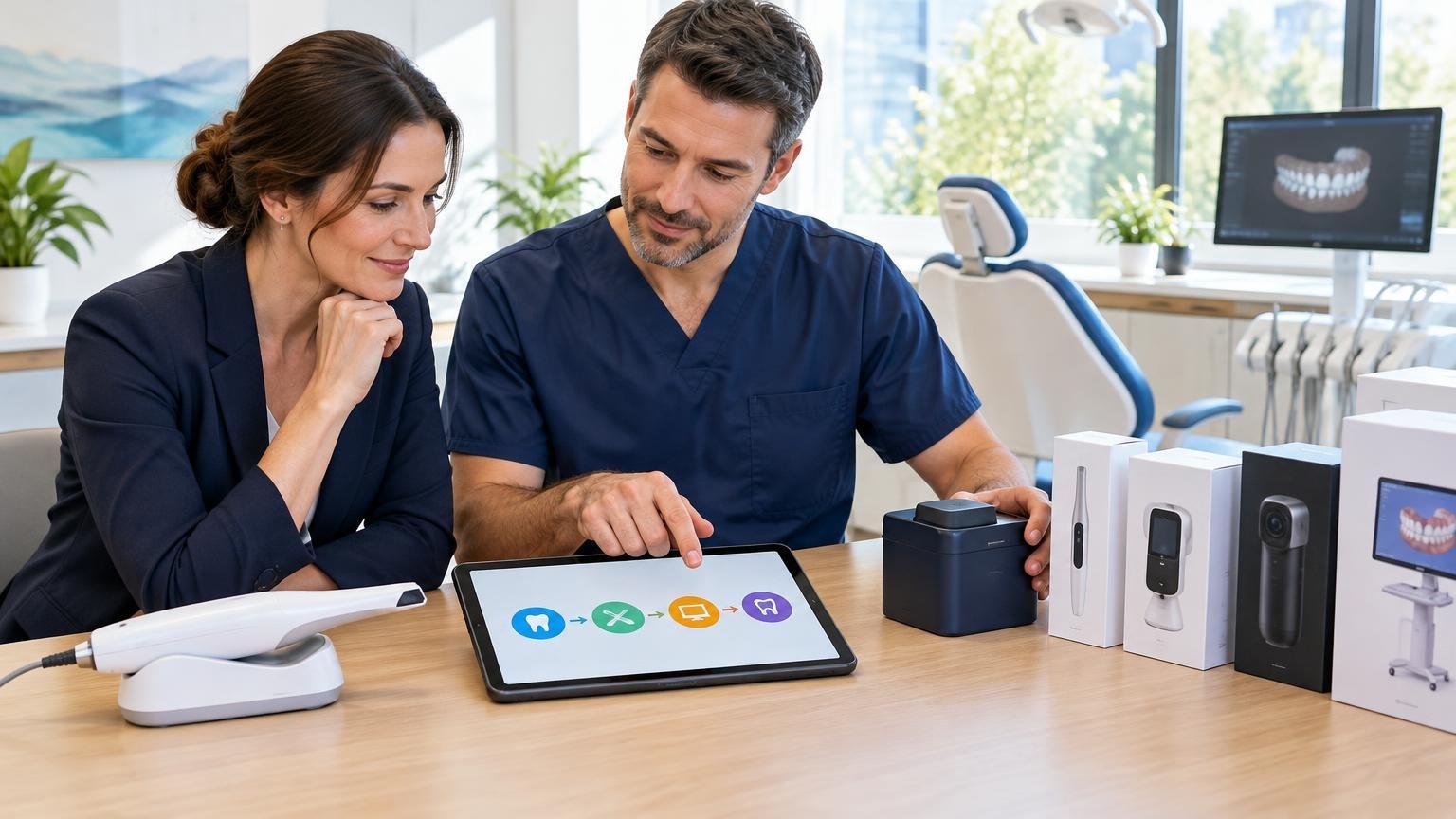
Make Every Technology Decision Serve Better Care
Dental technology adoption works best when it begins with a clear need, not a shiny feature list. New tools can support diagnostics, treatment planning, communication, efficiency, and the patient experience, but only when they solve a meaningful clinical or operational problem.
We see dental professionals surrounded by product launches, AI claims, software updates, digital workflow promises, and polished social media demonstrations. With so much information coming at you, it can be hard to tell the difference between a useful solution and an expensive distraction. A smarter approach helps you judge technology by patient care goals, team readiness, workflow fit, and long-term value.
Technology should be a strategic practice decision, not a race to own the newest platform or piece of equipment. The right question is not, "What can this tool do?" It is, "What problem will this tool help our team solve?"
Recognize the Hidden Costs of Feature Chasing
Feature chasing happens when a practice buys or subscribes to technology mostly because it is new, heavily promoted, used by peers, or loaded with capabilities that look impressive in a demo. Innovation is not the problem. Buying without a purpose, implementation plan, or way to measure success is where trouble begins.
A tool can look simple during a sales presentation and still create extra work once it enters the daily routine. New logins, duplicate documentation, manual data entry, unclear handoffs, and training gaps can turn a promising purchase into a source of frustration.
Warning signs often include:
- Buying a platform before defining the problem it should solve
- Relying only on vendor claims instead of asking practical workflow questions
- Overlooking integrations with current practice management systems
- Assuming one team member can handle all training and support
- Making a decision because of fear of missing out
We recommend pausing whenever a purchase feels rushed or driven by comparison. A feature that goes unused does not improve patient care, team efficiency, or the practice experience. It simply adds another system for people to manage.
Build a Practical Adoption Framework
Purposeful dental technology adoption starts by naming the specific challenge in front of you. That challenge may be reducing charting time, improving diagnostic consistency, supporting treatment acceptance, streamlining claims, strengthening recall communication, or making continuing education easier to access.
Once the need is clear, we suggest evaluating each option through five straightforward questions:
- Does it improve patient care or team efficiency?
- Does it integrate with our current systems and workflows?
- Is our team prepared to learn and use it consistently?
- Can we measure whether it is delivering value?
- Will it remain useful as our practice changes and grows?
These questions keep the conversation grounded. They also help separate a general upgrade from a solution with a real purpose.
Input from the people using the tool every day matters just as much as leadership approval. Dentists, hygienists, assistants, treatment coordinators, office managers, and IT support often see workflow problems that do not show up in a polished demo. When we include those voices early, we create better buy-in and spot problems before they become daily annoyances.
Validate Workflow Fit Before You Commit
Strong clinical capabilities do not guarantee a smooth rollout. If technology adds steps, interrupts communication, or forces staff to work around the system, adoption can stall quickly. The best tools reduce friction and fit naturally into the rhythm of care.
Rather than accepting a generic demonstration, ask vendors to walk through scenarios that resemble your real day. For example, you may want to see how the system handles imaging, charting, scheduling, consent forms, billing, patient messaging, reporting, and practice management integrations. Details matter because a workflow can break down at the handoff between one task and the next.
Before making a final decision, consider taking these steps:
- Request a trial or pilot period when available
- Speak with users from practices similar to yours
- Ask what training is included for every role on the team
- Confirm what support looks like after implementation
- Map out who owns setup, training, follow-up, and troubleshooting
Peer feedback can be especially helpful. A colleague may share practical details about training demands, support quality, limits in the software, or tasks that still require manual work. Those insights are often more useful than a long list of features.
Measure Value Beyond the Product Demo
An impressive demo is not the same as a successful implementation. Before introducing any new tool, decide what success should look like in your practice. Depending on the technology, that might mean fewer missed appointments, stronger treatment acceptance, shorter appointment times, less administrative work, clearer documentation, better patient feedback, or improved team satisfaction.
Baseline information gives you something real to compare against later. If you are considering communication software, track your current recall completion process and missed appointment patterns. If you are considering an intraoral scanner, look at case acceptance, remakes, turnaround time, and patient response. The goal is not to chase perfect numbers. It is to understand whether the new tool is making daily work and patient care better.
Financial value is only one part of the picture. Some technology may support better clinical decision-making, reduce staff stress, improve documentation, or help patients better understand their options. We encourage teams to set a review point, such as after an initial implementation period, then decide whether to expand use, improve training, adjust workflows, or discontinue the tool.
Turn Better Choices Into Lasting Progress
Smarter dental technology adoption does not mean resisting change. It means choosing change with intention. When we focus on outcomes, workflow, training, and measurement, technology becomes more likely to support the people who deliver care and the patients they serve.
A simple review process can make future decisions calmer and more consistent: document the problem, gather team input, compare options, confirm integrations, understand the full commitment, assign implementation responsibilities, and define success measures before signing on. Continued learning through peer communities, continuing education, live events, digital publications, and industry conversations can also help you evaluate new ideas with perspective instead of pressure.
Build a More Confident Technology Strategy
At Dentistry In General, we connect dental professionals with practical insights, trusted industry conversations, and resources that support informed growth. Learn how dental technology adoption can align with your practice goals, team capacity, and patient experience. For updates on education, events, and professional networking opportunities, contact us.