Elevate Hands-on Skills in a Digital-First CE World
Most of our CE time now goes into videos, webinars, and even AI tools. That is helpful for concepts, but it leaves a big gap in how we actually work inside a real mouth, with a real person, on a busy day. Clinical dentistry best practices live in that gap, where thinking, hands, and communication all meet.
As the weather cools and schedules heat up with year-end treatment, this is the perfect time to sharpen the basics that decide if a case feels smooth or stressful. In this post, we will talk about the parts of clinical dentistry that screens alone cannot teach well, like clinical judgment, hand skills, chairside talk, systems, and true practice autonomy. We will also touch on how small-room, hands-on learning helps fill in what digital CE often misses, so our work can feel more confident, repeatable, and calm.
Reclaiming Clinical Judgment Beyond Algorithmic Dentistry
Digital CE loves recipes. Do this, then that, use this product, bill this code. Protocols are helpful, but real mouths rarely follow a perfect flowchart. Clinical dentistry best practices depend on judgment, not just steps.
Good judgment means we are always asking things like:
- What is the biology of this tooth and this patient, not just the X-ray?
- How much tooth can we safely keep, not just what the course slide showed?
- How will this bite, this airway, this stress level affect the plan?
In a live setting, we get to slow down and study details that are easy to miss on a compressed video, such as:
- Tissue tone and color changes around old work
- Occlusal wear that hints at grinding, clenching, or airway issues
- Microfractures and craze lines that do not show up well on camera
- Parafunction signs like scalloped tongues or tension in facial muscles
Digital tools are helpful as decision support. Scanners, photos, AI readings, and practice data give us ideas and patterns. But they should not become the decision makers. The real value comes when we sit with experienced mentors, walk through gray-zone cases, and talk about why a certain plan fits one patient but not another. That kind of nuance grows best in small rooms, with questions, back and forth, and honest case review.
Tactile Skills and Chairside Craft That Require Live Mentorship
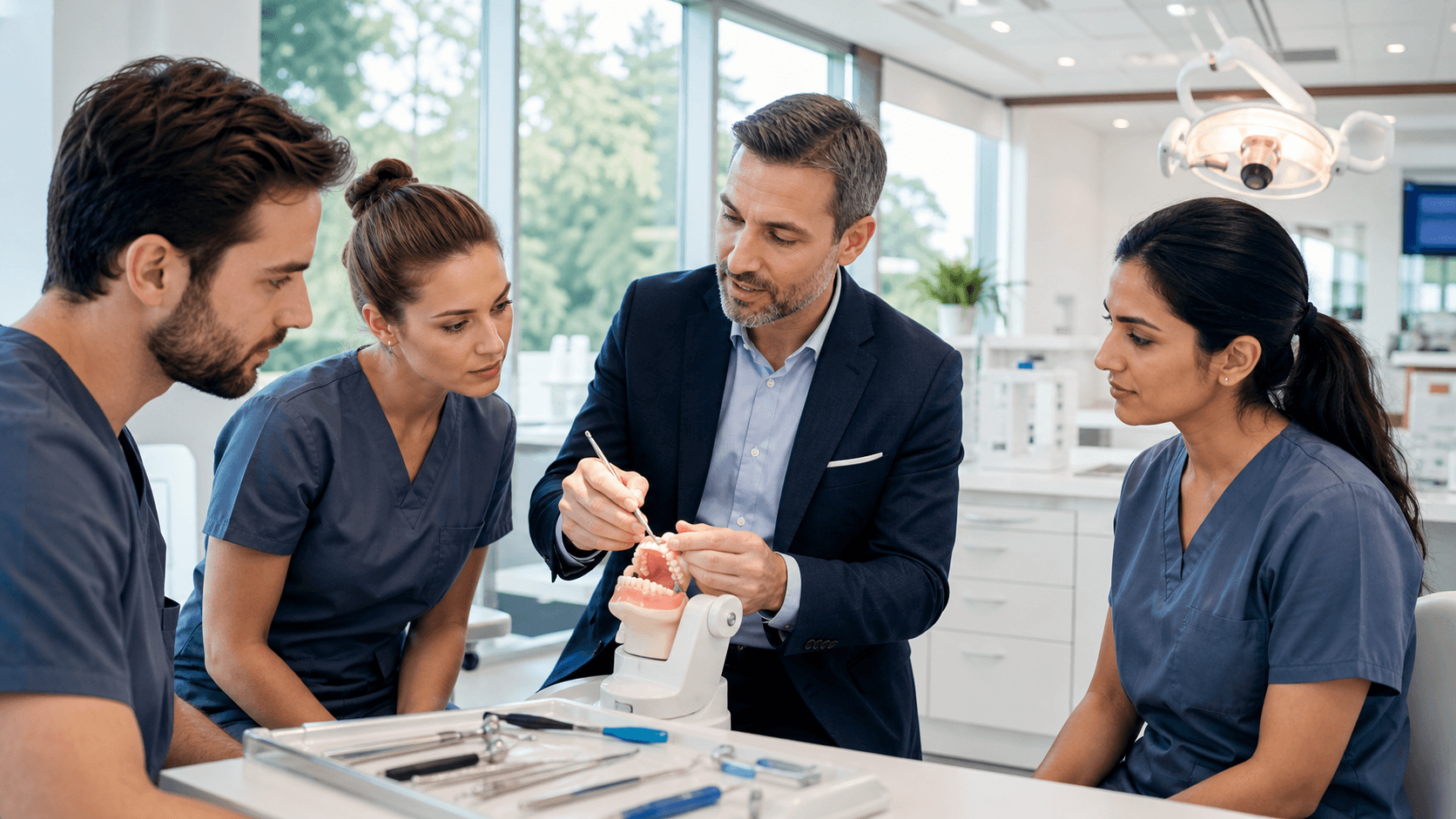
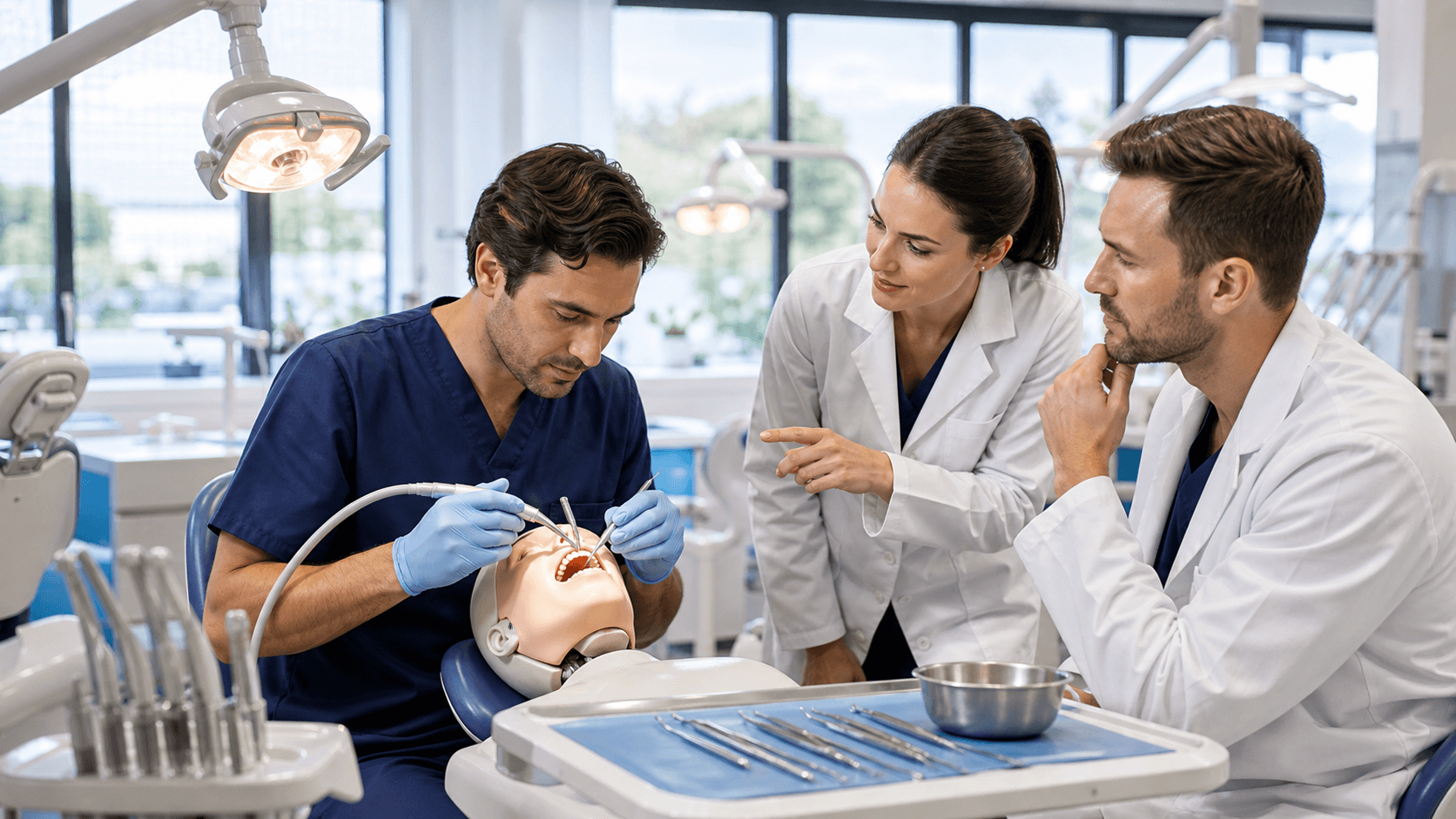
Hand skills are where digital CE struggles the most. A video can show a prep shape, but it cannot transfer the feel of the bur on enamel or dentin. In a live course, we can stand at a typodont or model, work, and have someone right there saying, "Lighter pressure, slower speed, different angle."
Key tactile skills that benefit from live feedback include:
- Bur control and pressure so we cut efficiently without chatter
- Margin design that is clear, clean, and kind to tissue
- Preserving enamel whenever possible for better bonding
- Controlling heat with water, air, and timing to respect pulp health
Soft-tissue work is another area where hands-on guidance matters. Clinical dentistry best practices here might include:
- Atraumatic retraction with cords, pastes, or instruments
- Predictable hemostasis so impressions and scans are clean
- Confident rubber dam placement for isolation and patient comfort
- Gentle blade use to avoid burns and rough wounds
Occlusion is its own language of sight, sound, and feel. Learning to read articulating paper, listen to the patient describe their bite, and sense high spots through the handpiece or bur vibration is much easier when we practice in person. Live mentorship helps turn guesswork into a calm, stepwise way of balancing bites and protecting our work from early failure.
Patient Communication and Case Acceptance in Real Time
Clinical dentistry best practices are not just about what we do with our hands. They are also about how we talk, listen, and build trust. Many digital CE role-plays feel stiff or scripted. Real people are not like that.
In the operatory, we have to read:
- Micro-expressions when we mention a crown or root canal
- Breathing patterns that tell us a patient is anxious
- Body posture that shifts when cost or time comes up
- Eye contact that shows trust, doubt, or confusion
Explaining complex dentistry in simple language is a skill we sharpen by practicing out loud, getting feedback, and hearing how others phrase the same idea. In small-group CE, we can role-play real situations, like how to explain cracked tooth syndrome or why a "watch" now needs treatment, until it feels natural.
Good communication also protects our autonomy. When we clearly cover risks, benefits, and choices, patients feel respected, and we feel free to recommend what we truly believe is best. That balance of ethics, value, and clear talk lowers stress for everyone and supports a strong private practice.
Systems That Support Clinical Excellence in Private Practice
Online courses often give us single tips. Try this matrix, say this line, use this template. But a thriving private practice runs on systems, not scattered tricks. Clinical dentistry best practices are supported by what happens before, during, and after each visit.
Helpful systems might include:
- Scheduling that leaves room for complex work without chaos
- Sterilization and setup routines that keep the flow smooth and safe
- Documentation habits that make future visits easier and clearer
- Follow-up plans for post-op calls and checks, especially before holidays
Team training is where live CE can really change the feel of the office. When doctors and team members learn together, they can practice:
- Handoffs that are clear and caring
- Room turnovers that are fast but calm
- Phone talk that matches what we say chairside
- Protocols for the fall and year-end surge, when many patients rush to finish treatment
Quality control is another area that benefits from small-room discussion. We can learn how to:
- Track remakes and ask what pattern is behind them
- Log post-op issues so we spot trends early
- Run simple self-audits of notes, photos, and outcomes
This kind of feedback loop helps us keep improving instead of repeating the same problems every busy season.
From Screen to Small Room: Putting Best Practices Into Action
Digital learning is not the enemy. It is a great way to get new ideas, learn about products, and review theory at our own pace. The key is to pair it with live, small-group experiences where we can test those ideas with our own hands and judgment before the holiday rush hits full speed.
A simple way to start is to audit our own habits. We can ask ourselves:
- Are my diagnoses consistent with what I see later in outcomes?
- Do my preps look and feel the same from case to case?
- Is my occlusion management calm and repeatable or rushed and lucky?
- How is my soft-tissue handling affecting my impressions and scans?
- Do my patients clearly understand what and why, or do I sense confusion?
- Do our systems help our dentistry, or do they fight it?
From there, we can pick one or two focus areas to improve over the coming months. As we do that, joining a community that values small-room, hands-on growth can make the process easier and a lot more fun. At Dentistry In General, our DIG-A-PALOOZA events and broader education ecosystem are built around exactly that idea, so clinical dentistry best practices move from the screen into our hands, our teams, and our everyday chairside work.
Elevate Your Everyday Dentistry With Proven Clinical Systems
If you are ready to put today's ideas into consistent action, our Cornerstone Seminars dive deeper into practical clinical dentistry best practices you can apply on Monday morning. At Dentistry In General, we focus on real-world protocols, not theory, so your team gains habits that actually stick. Explore our upcoming sessions and, if you have questions about which path is right for your practice, contact us so we can help you map out the next step.