Turn Your Dental Podcast Into Real CE Credit
Dental radio-style shows and podcasts are where many of us actually learn now. We listen in the car, on the treadmill, walking the dog, or flying to a conference. That time can be more than just background chatter. With the right planning, those episodes can become real CE that counts for license renewal.
The catch is that not every helpful podcast episode qualifies. Licensing boards and accrediting bodies expect structure, proof of learning, and clean documentation. When we treat audio like serious education, we can keep the easy, friendly feel of a podcast and layer in the rigor that CE needs. That is the core idea behind how we design learning at Dentistry In General and on the DIGRN network.
How CE Standards Apply to Audio Learning
Most dentists live inside a steady cycle of CE hours. Boards usually want a mix of topics, like:
- Clinical content such as diagnosis, treatment planning, and infection control
- Practice management, leadership, and team training
- Ethics, record-keeping, and sometimes jurisprudence or board rules
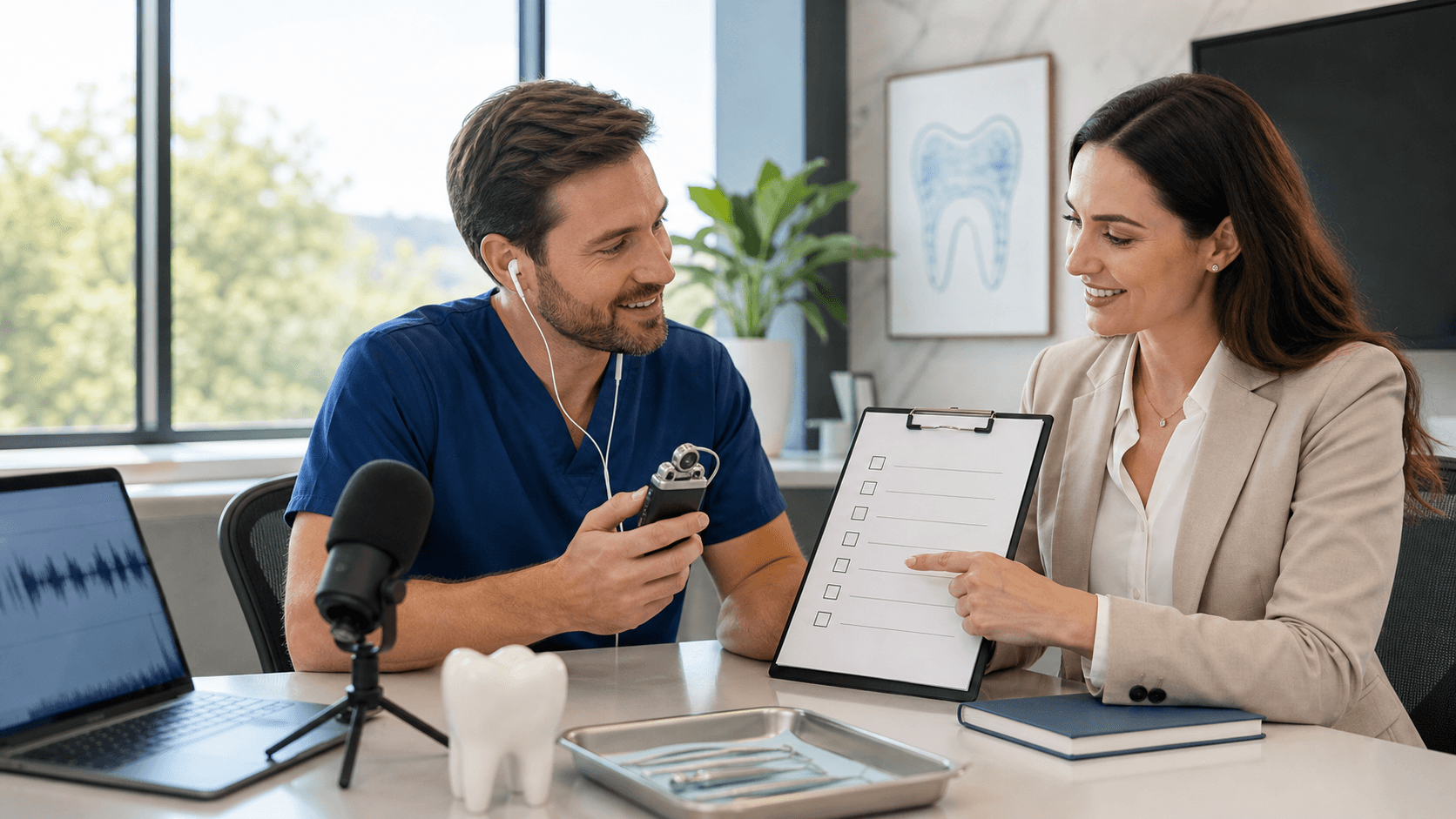
Audio content can fit into that mix as self-instruction or enduring material. Dental radio programs, podcast series, and edited recordings of live courses can all qualify if they are planned as education, not just casual talk.
Accrediting systems like ADA CERP or AGD PACE, and individual state or specialty boards, look for similar building blocks, including:
- Clear learning objectives tied to recognized competencies
- Speaker qualifications and short biographies
- time-based credit, usually in 0.25, 0.5, or 1.0 hour units
- Conflict-of-interest disclosures when products or sponsors are involved
- Documentation so a learner can pass an audit without stress
When we respect these standards, our audio content can sit right alongside in-person courses, virtual events, and written CE.
Structuring Podcast Episodes so They Actually Qualify
If we want an episode to count as CE, we should plan it very differently from a free-form chat. A clean structure keeps listeners engaged and makes compliance work much easier.
A simple format might look like this:
- Quick intro and disclosures
- Learning objectives, spoken clearly
- Main teaching segment
- Cases or scenarios that apply the ideas
- Short recap of key points
- Instructions for the quiz and certificate
Objectives should be specific and measurable. For example, instead of saying "Understand dental implants," we might say, "List three risk factors for early implant failure" or "Describe two communication steps to improve informed consent for implant surgery." That kind of detail makes it easier to write the episode and the assessment.
Topic depth matters too. It is better to focus on one defined slice than to skim ten subjects. A focused episode might:
- Review current literature and guidelines
- Walk through one or two clinical cases
- Point out gray areas and decision points
- Offer practical tips that a listener can apply the same day
Breaking episodes into 15 to 20 minute learning blocks helps line up with common CE increments. For example, three tight blocks around one topic can support a 1 hour CE listing, as long as total run time and content depth match the claimed credit.
Making Assessments That Prove Real Learning
Without an assessment, a podcast is just friendly dental radio. With an assessment, it becomes verifiable CE.
Good assessments:
- Tie directly to the stated objectives
- Match the level of the content, not too easy, not unfair
- Focus on application, not random trivia
Multiple-choice works well because it is easy to score and audit. Case-based questions often feel more real. For each 0.5 hour of CE, we usually aim for 4 to 6 strong questions. Each question should have:
- One best answer, without trick wording
- Clear language that any dentist can understand
- A brief rationale for the correct answer, shown after completion
Most providers set a passing score around 70 to 80 percent and allow at least one retake. The logistics matter too. It helps to offer:
- Quiz links in the episode notes or a companion page
- A reasonable time window to complete the assessment
- Instant score reports and downloadable certificates
This turns a passive listen on a commute into an active learning loop that boards can trust.
Staying Compliant with Records, Disclosures, and Data
Behind every CE-bearing episode is a quiet stack of paperwork. It is not glamorous, but it protects both the learner and the provider.
For each accredited episode, we keep:
- Title, topic, and release date
- Learning objectives and a brief outline
- Speaker bios and credentials
- Full disclosures, including financial ties or sponsorship
- References or resources that informed the content
- Quiz questions, answer keys, and version history
- Completion logs and sample certificates
Disclosures should be spoken at the start and also shown in writing wherever the episode is listed. If a speaker talks about a product or service, listeners should know about any financial relationship. The goal is to keep education evidence-based and free from commercial pressure.
Because CE requires personal data, such as email, license number, and quiz performance, we also have to think carefully about privacy. That means secure storage, limited access, and clear explanations about how data is used and how long it is kept.
Using Dental Radio Style Content Across Your Brand
The good news is that not every episode needs to carry CE. It often works best to have a mix of CE and non-CE content under one brand.
For example, a show might include:
- Deep, structured CE episodes on narrow clinical topics
- Casual interviews with practice owners about growth and culture
- Short segments on leadership, burnout, or lifestyle
CE episodes can also be repurposed. A single recorded session might turn into:
- A written article with a short quiz
- An interactive online module
- A live virtual Q&A at an event like DIG-A-PALOOZA, where the conversation continues in real time
Clear labeling is key. Every listing should spell out if the episode offers CE, how much credit, and what learners must do to earn it. That clarity builds trust with dentists who are tracking hours for renewal and with boards that may review certificates later.
Dentistry In General was built around this idea of blending community, real talk, and accredited education. Our DIGRN network treats audio content as a serious learning channel, not just noise in the background, while still keeping the friendly feel of dental radio that people enjoy during long summer drives or quiet breaks between patients.
Transform Your Practice With Smarter Patient Outreach
If you are ready to reach more of the right patients and strengthen your community presence, we can help you put dental radio to work for your practice. At Dentistry In General, we collaborate with you to align messaging, timing, and budget so every campaign has a clear purpose and measurable goals. Connect with our team to talk through your ideas and next steps, or contact us today to schedule a conversation.