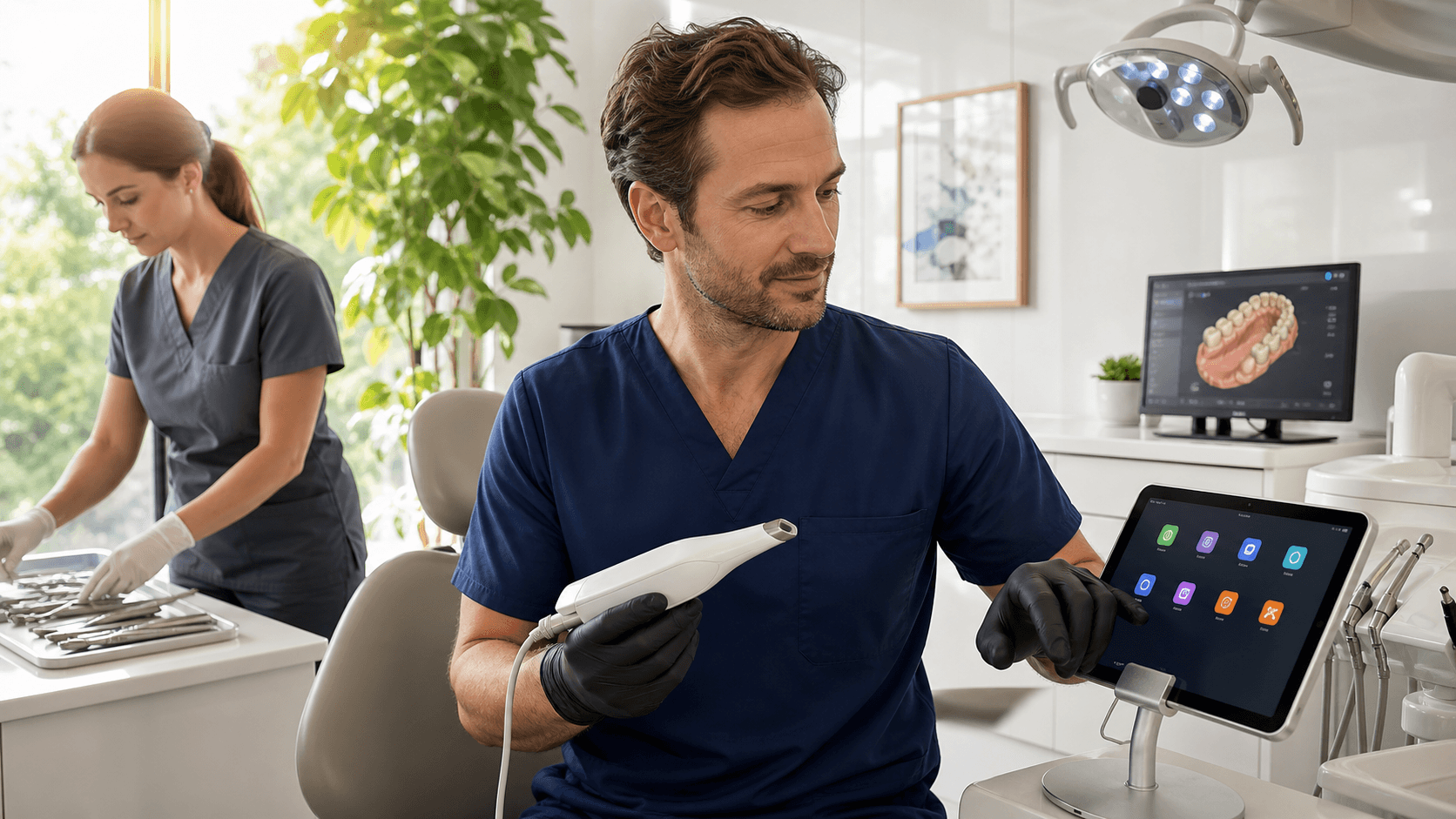
Future Proof Your Practice Without Selling Your Soul
Dental practice digitization is no longer a someday project. It is sitting in our operatories, our front desk screens, and even in our patients' pockets. The hard part is not getting the tech; it is doing it in a way that keeps our independence, our judgment, and our patient relationships at the center.
In this article, we will talk through how to bring more digital tools into your practice without losing control of your decisions or your brand. We will cover what digitization really means now, how to build a tech stack that fits your values, how to protect your clinical judgment when AI enters the room, and how to use this summer season as a reset point for you and your team.
Defining Digitization on Your Own Terms
Digitization is not just going paperless or adding one shiny new scanner. It touches every corner of the practice. When we zoom out, we can break it into three big buckets:
- Clinical tech, like digital imaging, intraoral scanners, and AI-supported diagnostics
- Operational tech, like practice management systems, billing tools, and analytics
- Patient-experience tech, like online booking, virtual consults, and secure messaging
The trap many of us fall into is vendor-driven digitization. A rep shows us something cool, everyone on social media is talking about it, and we feel like we have to keep up. Vision-driven digitization flips that by starting with the questions that define how you want your practice to feel and function:
- How do we want to practice?
- What kind of days do we want our team to have?
- What kind of experience do we want patients to talk about?
It also helps to know your starting point, because the best next step depends on where you are today. Most practices land in one of three stages:
- Analog-heavy, still on paper in many areas
- Partially digital, with some tools not talking to each other
- Highly integrated, where systems share data smoothly
Once you know where you are and what you care about, you can choose success metrics that protect your autonomy and reflect real improvements in day-to-day dentistry. Those might include more time face-to-face with patients, fewer late-night charting or admin hours, and clearer treatment conversations that lead to higher acceptance. Digitization that supports those wins feels very different from tech that just adds noise.
Building a Digital Tech Stack That Serves Your Values
The best digital choices start with values, not features. If your practice is built on deep, relationship-based care, you may prioritize tools that:
- Make it easier to show patients images and scans chairside
- Keep notes organized so every provider can continue the story
- Support easy two-way messaging that feels personal, not spammy
If your north star is clinical excellence, you may lean toward:
- High-quality imaging and scanner systems
- AI tools that surface small findings you might want to review
- Strong documentation tools so complex cases are crystal clear
If you care most about access to care or financial transparency, you may focus on:
- Simple online forms and booking, including for new patients
- Clear digital estimates and payment options
- Reminders that help patients stay on track without staff chasing them
No matter your values, it helps to use a simple framework that keeps your autonomy safe. Interoperability should come first, meaning you pick tools that can share data, or at least export it cleanly. You also want data ownership clarity so you know who owns the data, who can use it, and how you can take it with you. Just as important is the ability to exit, which means avoiding long contracts that trap you if the tool stops serving you. Finally, be honest about training: choose tools your current team can learn without breaking.
Common traps are easier to spot once you name them: all-in-one systems that lock you into a single ecosystem, financing deals that feel more like handcuffs, or buying premium features that no one on your team has time to use. A curated set of vetted tools, like the partner ecosystem we build at Dentistry In General, can make the search shorter while still keeping you in control.
Protecting Clinical Judgment in an AI and Data-Driven Era
AI is now part of daily dental life. It may help flag findings on radiographs, suggest treatment options, or predict which patients are likely to cancel. The key question is not whether we use AI, but how we keep it from quietly taking the wheel.
A simple mindset shift helps: AI is a consult, not a commander. In practice, that means we:
- Treat AI suggestions like a second set of eyes, not the final word
- Double-check outputs against our own training and the patient in front of us
- Document our reasoning, especially when we choose something different from the AI prompt
Data ethics sit right beside clinical judgment. When a tech tool touches your charts, imaging, or schedule, you need clear answers to questions like:
- Who owns the data stored in this system?
- Can the vendor use it to train models, adjust fees, or change how insurers see us?
- How easily can we export or delete that data if we move on?
Practical safeguards matter in the real world. Role-based access helps ensure people only see what they truly need. Routine checks help you compare AI suggestions with your outcomes over time. And team rules make it clear where human review is non-negotiable, for example, final diagnoses and complex treatment plans. This keeps your name, your license, and your ethics where they belong, at the top.
Leading Your Team Through a Digital Summer Reset
Summer is a great time for a mid-year reset. Schedules can be a bit lighter, kids are out of school, and there is space to tweak systems before the late-year rush hits. Instead of trying to fix everything at once, we like a simple digital reset playbook:
- Map your current workflows from first call to final follow-up
- Circle the bottlenecks, like no-shows, insurance delays, or charting backlogs
- Choose just one or two areas for a digital upgrade or clean-up
Team buy-in is where digitization lives or dies. Bring your hygienists, assistants, and admin crew into the conversation early, and use targeted questions to surface what really needs to change:
- What slows you down the most right now?
- What do patients complain about that we could fix with better tools?
- What would make your day feel smoother or more satisfying?
When people know tech is there to make their work easier, not to watch them, they lean in instead of push back. Micro-training can also keep the learning curve gentle:
- Short lunch-and-learns focused on one feature at a time
- Quick reference guides taped near monitors
- Simple screen recordings that staff can replay when they forget a step
In many places, including where we work from in the Dallas area, summer heat is real. A cooler schedule inside the practice can be the perfect time to cool off old habits and warm up new digital routines.
Turning Digitization Into Your Competitive Advantage
When digitization matches your values, it becomes something patients can feel. Shorter visits because imaging flows smoothly, clearer visuals when you explain treatment, easier payment options, and simple online communication all stand out.
You can check if your digital choices are working by watching a few key signs:
- Chair time per procedure
- Staff overtime hours or late charting
- Case acceptance and reappointment rates
- New patient growth
- Patient review comments about convenience, clarity, or communication
At Dentistry In General, our whole focus is helping independent dentists stay independent while they modernize. Through events like DIG-A-PALOOZA, our curated podcast network, and vetted practice solutions, we work to give clinicians a place to think, question, and plan their digital moves with peers who care about autonomy just as much as clinical skill.
The goal is not to become the most high-tech office in town. The goal is to choose one area at a time, whether clinical, business, or patient experience, and digitize it in a way that protects your independence and raises the level of care you provide every day.
Transform Your Dental Practice With Smart Digital Systems
If you are ready to streamline workflows, improve patient experience, and grow more predictably, our team at Dentistry In General can guide you through effective dental practice digitization. We will evaluate your current systems, identify the gaps that slow you down, and help you prioritize the right digital tools. To discuss your goals and next steps, simply contact us and we will follow up with a personalized plan.