Turn Digitization Into a True Clinical Edge
Digital tools in a dental office should not feel like an IT project. They should feel like sharper eyes, steadier hands, and clearer conversations with patients. When we think of dental practice digitization this way, it stops being about gadgets and starts being about better clinical decisions.
Right now, many general dentists feel pressure from every direction. Economic stress, staffing gaps, and patients who expect fast, clear answers, especially as year end benefits get used up. Smart digital choices can give us breathing room. They help us diagnose sooner, plan with more confidence, and deliver care that feels smooth, not frantic.
At Dentistry In General, we care about that kind of digital strategy. We focus on helping general dentists build digital ecosystems that support autonomy, profitability, and a modern clinical standard, not just a shelf of tech that no one really owns or understands.
Why Dental Practice Digitization Is a Clinical Decision
Every big digital choice in a practice is a clinical choice first. The tools we pick for imaging, records, communication, and workflows change how quickly we see patterns, how clearly we explain options, and how confident patients feel saying yes.
Surface-level digitization looks like this:
- Online intake forms that never connect to the chart
- A new logo on the website for software no one uses
- Scans and photos that sit in separate folders, hard to find in the moment
Clinically meaningful digitization looks very different:
- Imaging that flows straight into the chart with clear labels
- Calibrated photography that lets us compare changes over time
- Recall and follow-up systems driven by real clinical data, not guesswork
When the digital stack is well designed, we lower our cognitive load. We are not hunting for files, retyping notes, or trying to remember whether a scan was saved. That freed mental energy can go toward diagnosing subtle issues, planning complex cases, and staying present with the person in the chair.
A thoughtful digital design also reduces error risk. Less double entry, fewer lost notes, and more consistent documentation means the care story is easier to follow. That is good for the doctor, the team, and the patient.
Redesigning the Digital Exam for Better Diagnoses
A modern digital exam is more than a set of X-rays. It is a clear, visual story of what is happening in the mouth, and where things might be headed.
A strong digital exam flow might include:
- High-resolution intraoral photos from multiple angles
- 3D imaging when indicated for implants, airway, or complex anatomy
- Caries-detecting tools to support clinical judgment
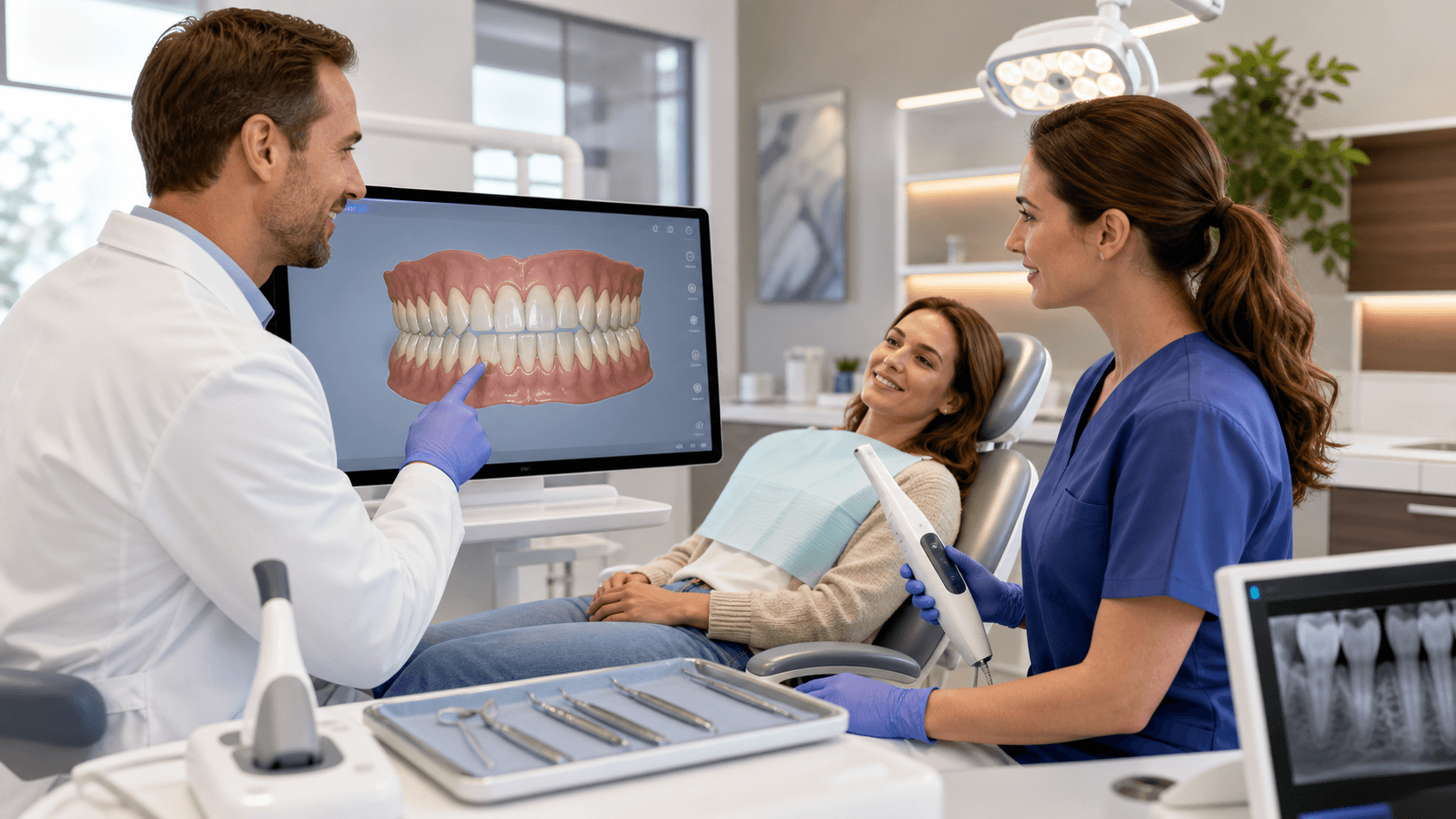
- Chairside screens that let patients see what we see
With this kind of setup, small problems do not hide for years. Early cracks, incipient caries, airway concerns, and occlusal wear become easier to spot. When we find issues earlier, we can plan more conservative, better sequenced treatment instead of reacting to emergencies.
The real magic happens in the chair when we tell the clinical story well. When we pull up a photo, circle a fracture line, and show a simulation of what could happen if nothing is done, the conversation changes. The patient is not just being told they need a crown. They are seeing how their tooth has changed over time and how a specific plan can protect it.
Good digital exams support co-diagnosis. Patients feel like partners, not bystanders. This often leads to smoother case acceptance and less back and forth at the front desk.
From Analog Chaos to Predictable Digital Workflows
If the exam is digital but the rest of the day is still paper, sticky notes, and guesswork, stress stays high. That is where full digital workflows matter.
Thought through digital workflows can:
- Shorten turnaround times
- Reduce remakes and adjustments
- Allow more complex restorative and cosmetic care to stay in-house
Take a digital impression-to-lab workflow as a simple example. A clear scan, attached photos, and a digital prescription sent directly to the lab mean fewer surprises when the case returns. Margin detail is clearer, shade information is better, and fit often needs less chair time.
Or think about a clear aligner case. From digital records to virtual setups and staged attachments, every digital step can tighten the feedback loop. We spot tracking issues earlier and make changes before a case drifts off course.
For the doctor, the payoff is a day with fewer fires to put out. Smoother scheduling, fewer last-minute remakes, and more control over which clinical procedures fill the schedule. This matters a lot when the holiday months hit and demand spikes while staff may be tired or stretched thin.
Data-Driven Decisions That Protect Clinical Time
When our practice is more digital, we also gain something that is easy to overlook: better data. Not just reports for the accountant, but information that can protect our clinical time and energy.
Useful data points can include:
- Chair time per procedure type
- No-show and late cancel patterns by day and time
- Hygiene reactivation rates
- Case acceptance by provider and treatment category
When we look at this through a clinical lens, it becomes a tool. We can rebalance the schedule mix so the most demanding procedures sit where we have the most focus. We can plan team CE around the procedures we love doing and want to grow. We can spot which services are both clinically satisfying and profitable.
There is always a risk of data overload. We suggest a simple dashboard approach. Pick three-to-five core metrics that tie straight to clinical goals, such as more complete exams, better follow-up on perio care, or fewer broken appointments in prime time. Review them regularly and let them shape decisions on training and technology upgrades.
Building a Future-Proof Digital Ecosystem
Dental practice digitization is not about chasing every new tool. It is about building an ecosystem where systems actually talk to each other. Interoperable tools help us avoid being locked into a single vendor that limits clinical choice and can raise long-term costs.
A future-friendly setup focuses on:
- Open data flow between imaging, charting, and communication tools
- Clear backup and recovery plans for records and images
- Simple, repeatable processes for onboarding new team members
Cybersecurity and HIPAA are not just boxes to check. They protect continuity of care. If data is lost or systems go down, treatment history, imaging, and planning can be disrupted. Good security and backups help keep the clinical story intact for every patient, during busy seasons and quiet ones.
Looking ahead, tools like AI-assisted diagnostics, virtual treatment planning, and more advanced imaging protocols are likely to become more common. Practices with thoughtful digital foundations will find it much easier to layer in these tools when they are clinically appropriate.
At Dentistry In General, we believe the best time to rethink dental practice digitization is before the schedule gets too wild. When we treat technology as a clinical ally, not a distraction, we create offices where diagnosis is sharper, workflows are calmer, and both patients and teams can breathe a bit easier.
Transform Your Practice With Smarter Digital Systems Today
If you are ready to streamline workflows, improve patient communication, and get better insight into your numbers, Dentistry In General is here to help. Explore our tailored approach to dental practice digitization and see what a fully integrated, modernized office can look like. We will walk with you step by step so your team feels confident, supported, and in control throughout the transition. Have questions about the right path for your practice? Contact us to start a focused conversation about your goals.