When "Good Enough" Quietly Becomes a Growth Ceiling
Dental practice innovation sounds big and flashy, but for most general dentists it shows up in small, daily choices. We see it when the schedule runs on repeat, the same crowns, the same fillings, the same emergencies, month after month. Production looks fine on paper, yet your stress is rising and your energy is dropping.
Early summer makes this even trickier. Kids are out of school, patients are on vacation, and gaps in the schedule feel like "just a seasonal slowdown." It is easy to tell ourselves everything is fine. But sometimes what looks like a blip is really the start of a plateau.
At Dentistry In General, we care about a different kind of innovation. Not toys for the sake of toys, but smarter systems, more autonomy, and private practice success built on actual learning, not hype. Let us walk through how to spot when things have stalled, what it is quietly costing you, how culture and leadership feed the slowdown, and simple ways to restart momentum before the year ends.
Subtle Signs Your Practice Has Stopped Innovating
One of the first signs is that each year feels like a rerun. You are booked solid, but nothing really changes.
Common signals here include:
- Monthly production and collections stay about the same
- New patient numbers that hover in the same range
- No real shift in procedure mix or case size
Busy yet flat is a classic pattern when dental practice innovation has stalled. Same services, same marketing, same schedule template. A quick look at your numbers from January through June can be eye-opening. Are you growing, or just repeating last year on autopilot?
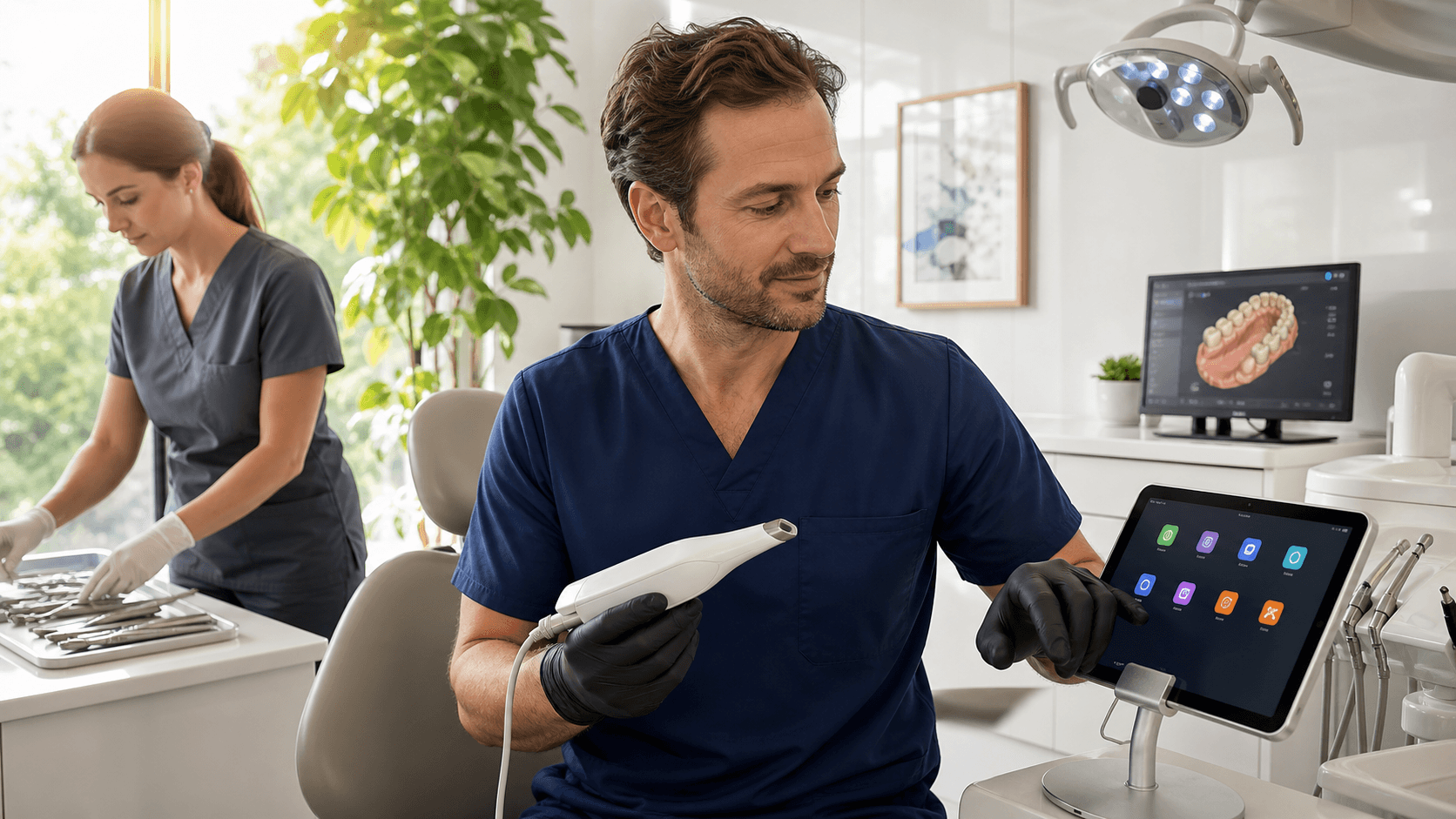
Another sign shows up in your tech. You might own a scanner, CBCT, or upgraded practice software, but:
- You still treatment plan and present like you did before
- Appointment lengths and flow have not improved
- Patients do not feel a smoother, clearer experience
That is what we call "checkbox innovation." Buy the thing, snap a few photos, then keep every system the same. When that happens, team members start to roll their eyes at the next big purchase. They see extra steps and no benefit, so future ideas get shot down faster.
Culture is often where the stall starts. When someone suggests a tweak and hears, "We tried that," or "Our patients will never go for that," it rarely comes from data. It comes from fatigue. When the daily grind never gets better, people protect themselves by resisting change. That resistance shows up long before the slowdown hits your profit and loss statement.
The Hidden Costs of Stalled Dental Practice Innovation
Stalled innovation does not always show up as a revenue drop. Often, the top line stays flat while the bottom line shrinks. Overhead quietly creeps up. Lab and supply costs rise. Team wages grow, as they should. But if you are not improving efficiency, adding higher-value services, or tightening your systems, your take-home pay gets squeezed.
That silent squeeze is like a tax on inaction. It often becomes obvious only during tax time or a mid-year review, when you ask, "How am I working this hard for the same money?"
There is also the cost of the patients you never meet. Without small patient experience upgrades like:
- Simple online booking or requests
- Easy, digital intake instead of stacks of paper
- Clear, modern communication by text or email
you slowly lose younger and more tech-aware patients to offices that feel easier to work with. They may not say anything. They just do not call back.
Even long-term patients can say yes less often if treatment is not presented in a way that feels clear, modern, and tailored to them. When we do not refresh how we educate and present, case acceptance can slide down quietly.
Then there is the personal cost. When we stop learning, clinical confidence can flatten. Dentistry starts to feel like a grind instead of a craft. In that space, offers from large groups can begin to look more attractive, not because they are better, but because we feel stuck. Staying in the same low-value procedural lane also weakens your leverage with insurers and vendors. Innovation and autonomy are more connected than many of us like to admit.
Culture, Leadership, and the Innovation Slow Fade
Innovation often fades because of mixed signals from leadership. We say we want growth, but:
- We put off decisions until "things calm down"
- We brush off team ideas without really testing them
- We live in constant firefighting mode, especially in busy summer weeks
Over time, the team learns that new ideas do not actually go anywhere. So they stop bringing them.
Many practices also run on old playbooks. Hygienists, assistants, and admins use workflows they learned years ago, even though the software has changed and patient expectations have shifted. When:
- There is little cross-training
- Only the doctor gets CE
- Processes are never mapped and refined
small problems turn into chronic bottlenecks. Phones feel chaotic. Hygiene feels rushed. Hand-offs break down. Energy drops.
Fear of change can hide inside the phrase "we are just conservative." There is a big difference between clinical caution and avoiding simple, low-risk improvements in scheduling, communication, or financial systems. We can be clinically thoughtful and still be open to better ways of running the day.
Practical Ways to Restart Innovation by Year's End
Early summer is a great time to do a mid-year innovation audit. Nothing fancy. Just an honest look at where things stand. Helpful questions might include:
- What is truly new in the last 12 months?
- Which investments actually changed how we work?
- Where are we still doing things "the old way" out of habit?
Asking a trusted advisor or peer group for feedback can keep us from hiding in our own blind spots.
To avoid overwhelm, pick one clinical and one operational shift to focus on. For example:
- Clinical: adopt a clearer diagnostic and case presentation flow for comprehensive care
- Operational: test a new hygiene schedule pattern during July and August
Treat these as small pilots. Decide ahead of time how you will measure success, such as chair time, team stress level, or case acceptance, before you roll changes across the whole practice.
Innovation also grows faster when we are surrounded by peers who treat growth as normal. That is why we built Dentistry In General around education, CE events like DIG-A-PALOOZA, and podcast conversations focused on real-world private practice life. Regular exposure to grounded ideas keeps you from slipping back into "good enough."
Turn Stalled Momentum Into a Strategic Comeback
Noticing that innovation has stalled is not a failure. It is a sign that you are paying attention before outside pressures force you into rushed choices. From that place, you can set a clear, simple agenda for the next six to twelve months that fits how you want to practice and live.
As the weather warms and schedules shift, we can treat summer not as a lull, but as the starting line. With focused CE, honest peer conversations, and a few thoughtful experiments, innovation becomes less of a big event and more of a steady habit. That is the space where autonomy, clinical joy, and a healthy private practice can grow together.
Transform Your Dental Practice With Proven Innovation
If you are ready to streamline systems, strengthen your team, and grow with confidence, we are here to help. At Dentistry In General, we guide you through practical strategies rooted in real-world dental practice innovation. Our team will work with you to identify your next best steps and support you as you implement them. To start the conversation, contact us today.